
Skating starts here.
Having taught millions the skills needed to achieve their recreational and competitive dreams on the ice, CanSkate is the best learn-to-skate program in Canada. Period.
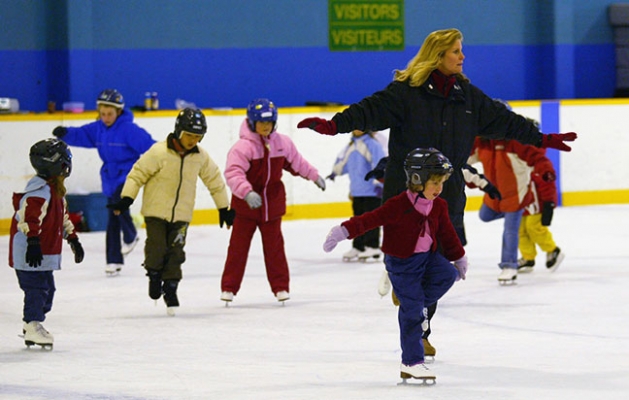
Designed for beginners of all ages—including children, adults, and athletes with disabilities (AWAD)—CanSkate helps you improve basic skating skills for figure skating, hockey, ringette, or speed skating, while promoting fitness and fun.
We work with a nationally tested curriculum that focuses on balance, control, and agility while empowering skaters to hone essential skills, in a safe and friendly environment.
Countless Canadians, from World and Olympic champions to NHL stars, took their first strides through our program. Offered at clubs and skating schools in communities nationwide and led by NCCP-certified coaches, CanSkate is your pathway to skating success.
What is It?
This program provides a development pathway for anyone who wants to learn to skate.
Skaters of all ages learn best when they are:
-
-
Active
-
Engaged
-
Moving
-
Challenged
-
Motivated
-
Having fun
-
Group lessons taught by Skate Canada professional coaches, assisted by trained program assistants.
Foundational program for all other Skate Canada programs. (Official learn-to-skate program of Skate Canada)
Each stage focuses on these 3 Fundamental Areas (The ABCs of Skating):
-
Agility
-
Balance
-
Control
Skaters earn a ribbon for mastering each area.
After earning all three ribbons, skaters receive a badge for completing that stage.
Core skills include: Forward and backward skating, Stopping, Turning, jumping
Additional development: Speed, Flexibility, Power
PROGRAM STRUCTURE: STAGES
7 Stages total (including Pre-CanSkate).
- Pre-CanSkate: When a new skater enters the program the start in the Pre-CanSkate stage. This is for skaters who are stepping on the ice for the first time, at any age. If a skater has some skating experience but not in the CanSkate program they will be assessed using the Pre-CanSkate skills to assess which level they can be placed in.
- Stage 1: Once skaters pass Pre-CanSkate they begin their assessments with Stage 1 to 6. In Stage 1 skaters are starting to move more and gliding instead of walking across the ice. They will start learning the mechanics of stopping, skating backwards, and turning.
- Stage 2: In this stage skaters are introduced to new skating skills like sculling and push/glide sequence. Harder skills are introduced like one foot glide, two foot turns while moving, forward two foot jump and backward 2 foot sit glide.
- Stage 3: At the halfway point skaters are moving quicker with more balance and control, able to stop from higher speeds. At this stage skaters are introduce to the mechanics of "crosscuts" or "crossovers" these are an essential skill for any ice sport for generating speed quickly. All the forward skills skaters learned in the first two stages are learned backwards in this stage.
- Stage 4: In stage 4 we see skaters starting to lean towards what ice sport they would like to join/already have joined. Stage 4 is the minimum requirement for joining our Bridging program or for joining the PowerSkate program. Sport specific skills are introduced for both hockey/ringette, speed skating and figure skating. Skaters also have their first Speed drill, which requires them to skate as fast as they can from the goal line to the first blue line.
- Stage 5: Skaters are introduced to advanced skating skills including inside edges, one foot slalom, backward crosscuts, forward one foot turn and continuation of sport specific skills. Their second Speed Drill skating from the goal line to the second blue line. Once a skater has completed Stage 5 they are allowed to skate without a helmet, to the discretion of the parents.
- Stage 6: The final stage of CanSkate is an amalgamation of the skills skaters have learned so far. Skaters will be able to know the difference between inside and outside edges, power crosscuts, control and balance of one foot skills, with an introduction to advance skating skills like hockey starts, figure skating spins/jumps and one last Speed Drill that times how fast they can skate from one goal line to the other.